

Probability vs. Certainity
In a World of Chaos, Math is the Only Edge
The Great Trading Illusion: Certainty vs. Math
The biggest obstacle to a Smart Trading Mindset is the human desire for certainty. Beginners enter the market searching for the “Holy Grail”—a surefire indicator or a 100% win-rate strategy. However, the professional reality is that the market is a chaotic environment where nothing is guaranteed. To thrive, a trader must transition from seeking “The Truth” to managing “The Odds.” Understanding that trading is a game of probabilities is the moment a gambler becomes a professional operator. Whether you are analyzing Bitcoin or high-volatility assets like Solana, your edge lies in the math, not the prediction.
The Psychological Weight of Being Right
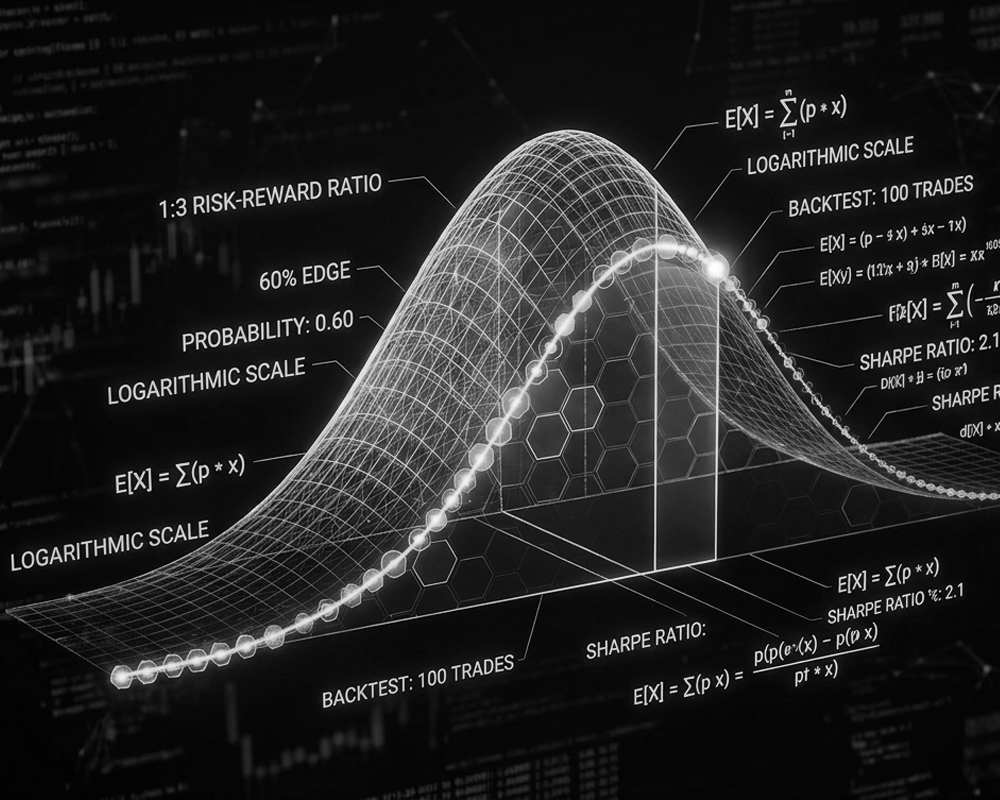
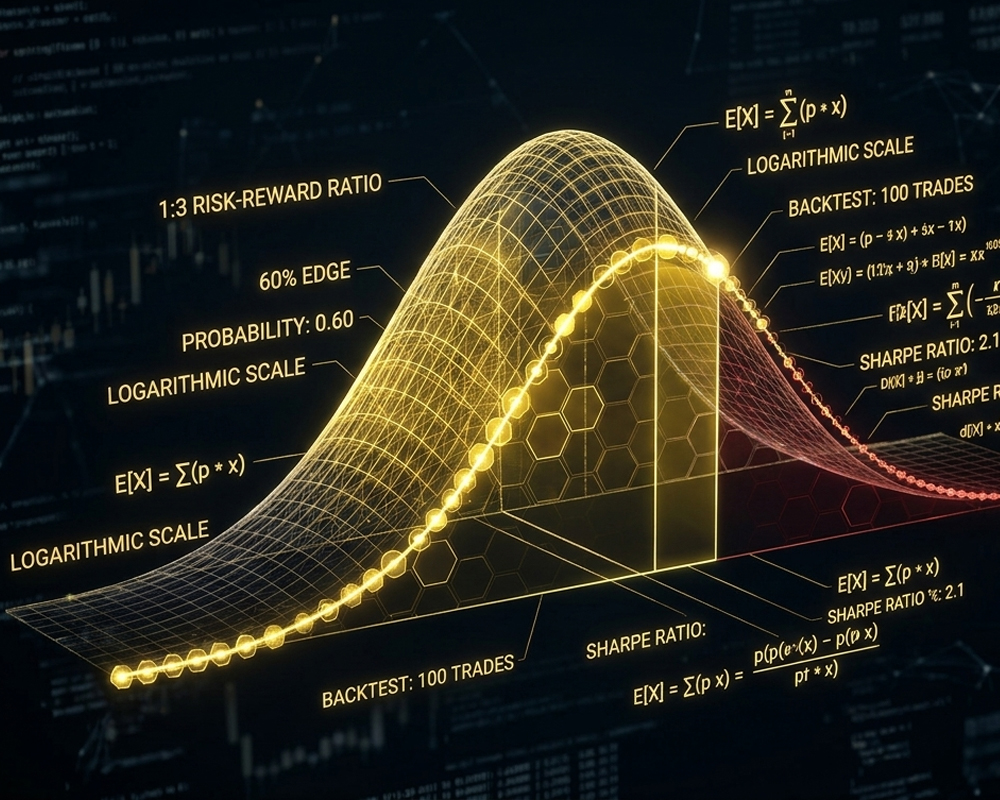
When you trade for certainty, you are emotionally tied to every single candle. This mindset leads to catastrophic errors: over-leveraging on a “sure thing,” panicking when a trade dips, or “revenge trading” to prove the market wrong. In Discipline & Risk Management, we learn that needing to be right is a liability. By embracing Probabilities vs. Certainties, you remove the emotional weight of a single loss. If your strategy has a 60% win rate, you must mathematically accept that 40 out of every 100 trades will be losers. These losses aren’t failures; they are the “cost of doing business” in a probabilistic system.
The Casino Model: Trading with a Statistical Edge
The most successful traders think like a casino owner, not a gambler. A casino doesn’t panic when a player hits a jackpot because they know that their “Edge” ensures profit over thousands of hands. As a trader, your “Edge” is a combination of technical tools like Support and Resistance and Moving Averages. Your goal isn’t to win every trade, but to execute your system consistently so the statistical edge can play out over time. This long-term perspective is what allows you to handle Market Trends with cold, calculated execution rather than fear.
Mathematical Power: Risk-to-Reward Dynamics
Probability-based thinking is useless without a positive Risk-to-Reward (R:R) ratio. This is the “Engine” of your profitability. If you risk $100 to gain $300 (a 1:3 ratio), you only need to be right 30% of the time to break even. A trader with a 40% win rate and a 1:3 R:R ratio is a wealthy trader. By focusing on Setting Realistic Expectations, you stop chasing “perfect” entries and start looking for “high-reward” opportunities. This mathematical cushion protects you during inevitable losing streaks and keeps your capital intact for the next high-probability setup in Ethereum or other major assets.
Conclusion: Embracing the Randomness
The final step in your Trading Philosophy is accepting short-term randomness. On any given day, the market can do anything. News, liquidations, or “Black Swan” events can break even the best setups. However, a professional trader remains unfazed because they don’t trade for “today”—they trade for the “next 100 trades.” When you stop chasing certainty, you gain something much more valuable: Power. You gain the power to stick to your system, the power to manage your risk, and the power to grow your portfolio with clinical precision.
Concise market insight, delivered to your inbox.
By subscribing, you agree to our Terms of Service and Privacy Policy.