
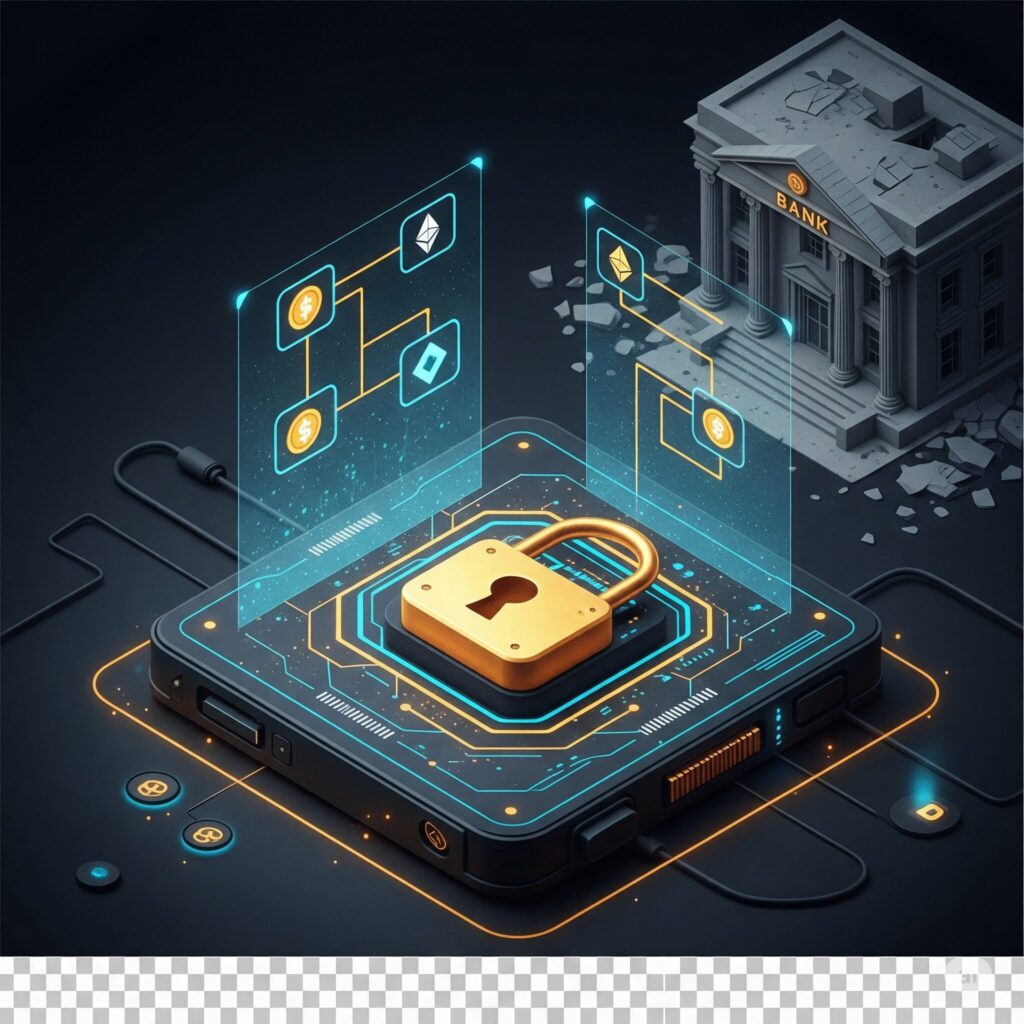
Crypto Wallets vs. Banks: Is Self-Custody Safer?
As digital finance evolves, one big question keeps coming up: Can crypto wallets actually be safer than traditional banks? The answer depends on the custody model, asset, safeguards and risks; neither option is universally safer.
🔐 Key Control and Recovery Responsibility
In self-custody you control the signing keys and recovery arrangements; with a custodian you depend on its controls and terms. Wallet types differ. Key control avoids one provider dependency, but does not eliminate software, network, legal or personal-security risks.
- Example: Holding keys for native Bitcoin or Ethereum lets you authorize transactions without a bank’s approval. It does not guarantee a working internet connection, a functioning network, an available exchange or immunity from applicable law.
🧱 What Wallet Security Does and Does Not Cover
A bank account and a wallet solve different problems. A wallet manages keys; it does not itself make a service decentralized. Blockchain assets can still be stolen through compromised keys or unsafe signatures.
When we look at Crypto Wallets vs Banks Safety, hardware wallets stand out because they are designed to isolate signing keys from the connected computer. This reduces some risks but does not prevent recovery-phrase theft, malicious transaction approval, device vulnerabilities or physical compromise.
💼 Access, Fees and Privacy Trade-offs
- Access: Networks such as XRP Ledger and TRON normally operate around the clock, as do many banking apps. Outages, maintenance, congestion and provider withdrawal restrictions can interrupt access.
- Fees: Compare the whole route: trading spread, network fee, withdrawal charge, currency conversion and the recipient’s cash-out cost. A crypto transfer is not automatically cheaper than a bank transfer.
- Privacy: Public blockchains can expose balances and transaction history. An address is not the same as a verified identity, but activity can be linked to a person. Providers may require identity checks under local rules.
- Transparency: Public blockchain records allow verification of recorded transactions. They do not reveal every exchange liability, off-chain transaction or commercial promise.
🤔 So, Is It Time to Go Bankless?
Eligible bank deposits may have statutory protection subject to the relevant country, bank, account and limits. In the United States, FDIC insurance does not cover crypto assets or an exchange’s own failure. Self-custody shifts key-management responsibility to you; it does not create deposit insurance.
Compare recovery options, asset-price risk, fees and your ability to maintain backups before choosing custody. Learning about Bitcoin is useful, but popularity is not evidence that one storage arrangement is safest for you.
⚠️ Disclaimer: This article is for educational purposes only. Self-custody requires personal responsibility. If you lose your seed phrase, you may lose access to your funds forever.
Compare the failure you need to survive
Ask two separate questions: “What happens if the provider fails?” and “What happens if I lose my own recovery material?” Self-custody and bank deposits answer these differently. Neither a provider logo nor a private key is a complete safety plan.
Sources and further reading
- FDIC: eligible deposits and products not covered
- FDIC: insurance does not cover crypto-company failure
- SEC: self-custody and third-party custody
Security claims reviewed 28 October 2026. Product features and provider terms can change. For education only; not financial or investment advice.
Discussion